
Rotobrush guide
What Is Rotobrush Duct Cleaning?
Rotobrush duct cleaning uses rotating brush agitation and vacuum capture to remove accessible debris from residential duct sections, registers, and returns. This guide explains when it helps, when it does not, and how to evaluate the method honestly.
Updated 2026-06-06Rotobrush duct cleaningBrush and vacuum duct cleaningRotobrush air duct cleaning process
Quick answer
The short version.
Rotobrush duct cleaning is a brush-and-vacuum method for cleaning accessible residential ductwork. It helps when inspection finds reachable dust, remodel debris, register buildup, or return-side dust. It is not automatically the best method for every duct system, so access, duct material, debris type, and system condition should decide the scope.
Member savings
Hales AC Comfort Club members can save on eligible duct and indoor air quality work.
Guide review
Reviewed against Hales AC service standards.
This guide is written for homeowner decisions, not scare tactics.
St Pete Duct Cleaners guide content is reviewed against the Hales Air Conditioning service standard: inspection first, clear scope, practical pricing context, and no medical or guaranteed-outcome promises. The HVAC license shown with this service is Florida HVAC license CAC1822636.
Reviewed by
Hales Air Conditioning service standards
License
Florida HVAC license CAC1822636
About the team
Name, phone, service area, and Hales AC-backed service information
Clear scope
Inspection-first recommendations
Step by step
How Rotobrush duct cleaning works
6 steps
The brush-and-vacuum Rotobrush process for cleaning accessible residential ductwork, step by step, with inspection and access limits documented before cleaning.
- 1Inspect registers, returns, accessible duct sections, and overall system condition before cleaning.
- 2Confirm duct material, flex-duct condition, reachable runs, and filter-path issues that could affect the cleaning scope.
- 3Protect floors, walls, registers, return grilles, and work areas around the air handler.
- 4Run the rotating Rotobrush brush through reachable duct sections to agitate loose dust and debris.
- 5Capture loosened material with vacuum suction during the same cleaning pass.
- 6Clean supply registers and return grilles, then review any access limits, filter, return, duct, dryer vent, or indoor air quality concerns found.
Reference details
Review the equipment, product, and safety context behind this guide.
These references help explain equipment names, product labels, and duct-material guardrails. The right recommendation for your home still depends on inspection, access, duct material, moisture history, and what can be cleaned safely.
Equipment visuals
Match the equipment to the inspected condition.
These manufacturer images help identify the tools and products discussed in the guide. They are not a promise that every duct, dryer vent, or odor complaint needs every tool.
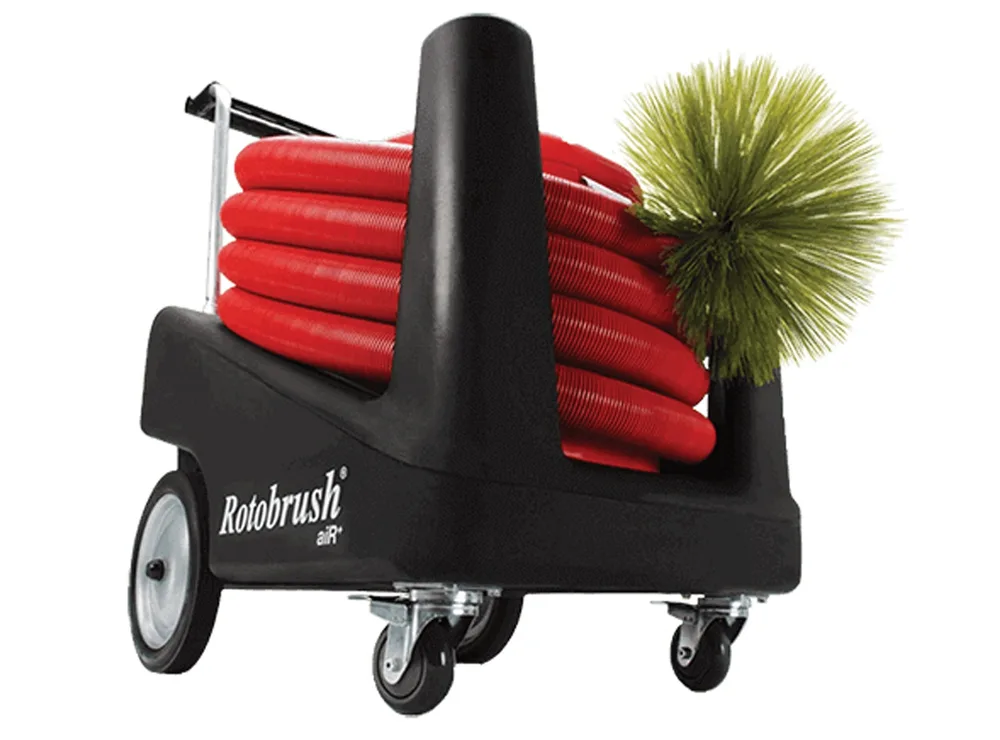
Air duct cleaning equipment
Rotobrush BrushBeast brush-and-vacuum equipment
Used for reachable residential duct sections where brush agitation and vacuum capture fit the duct material, access, and debris type found during inspection.
Reference: Rotobrush BrushBeast
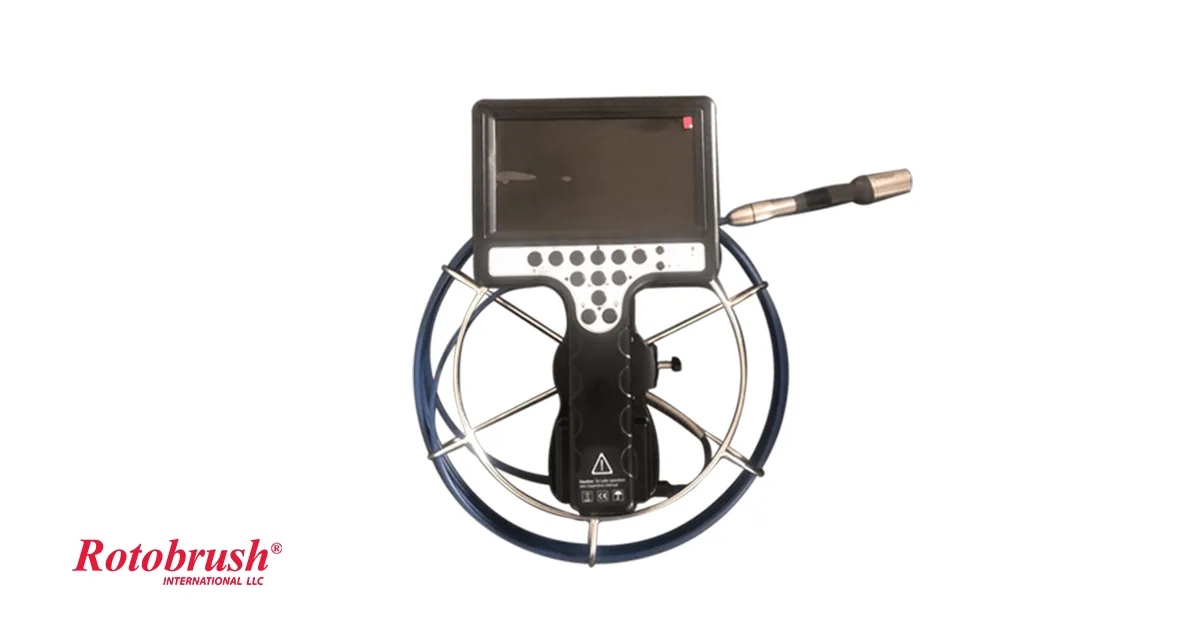
Inspection support
Rotobrush i2Cam inspection camera
Camera inspection can support clearer before-and-after documentation where access allows, especially for ducts, returns, and homeowner questions about what was found.
Reference: Rotobrush i2Cam
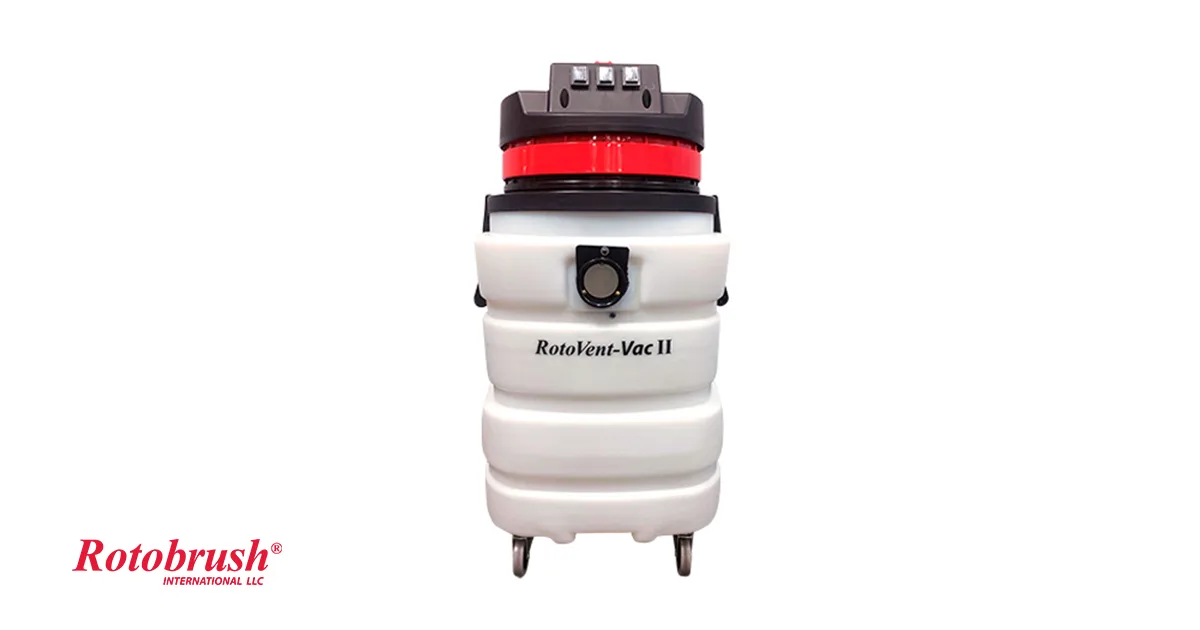
Dryer vent equipment
Rotobrush RotoVent-Vac dryer vent equipment
Used for dryer exhaust paths where lint restriction, weak outside airflow, long dry times, or access conditions call for dedicated dryer vent tools.
Reference: Rotobrush RotoVent-Vac II
What to check
Use the symptom to choose the next step.
How the Rotobrush method works
The goal of Rotobrush duct cleaning is to loosen debris inside reachable duct sections and capture it through a controlled vacuum path. The technician still needs to inspect access, duct condition, register layout, and return setup before deciding how to clean.
A rotating brush agitates accessible dust and debris
Vacuum suction captures loosened material during the cleaning pass
Supply registers, return grilles, and reachable duct sections are reviewed
The visit should also flag filter, return, or indoor air quality issues that can make dust return
| Step | What the homeowner should hear |
|---|---|
| Inspection | The technician identifies duct material, access, visible debris, return condition, and any fragile or damaged flex duct before cleaning. |
| Agitation | A rotating brush loosens reachable dust and debris instead of relying on suction alone at the vent opening. |
| Vacuum capture | The loosened debris is captured during the same pass so dust is not simply pushed deeper into the system. |
| Limit review | Any duct sections that cannot be reached safely should be explained instead of marked as cleaned. |
When brush-and-vacuum duct cleaning helps
Rotobrush-powered cleaning is a reasonable fit when the problem is physical debris that can be seen or reached. It should not be sold as the fix for every dust, odor, allergy, or humidity complaint.
Dust or debris is visible around multiple supply registers
A remodel, flooring project, or drywall work left dust in the home
Return grilles or accessible duct interiors show buildup
The home needs duct cleaning plus filter-fit or indoor air quality recommendations
Is Rotobrush the most effective duct cleaning method?
The most effective duct-cleaning method is the one that matches the duct system, access, debris type, and homeowner goal. Rotobrush can be a strong residential method when brush agitation and vacuum capture can reach the debris safely; it is not the right answer for damaged, wet, inaccessible, or poorly supported ductwork.
Choose method by duct condition, not by a one-size-fits-all sales claim
Brush-and-vacuum cleaning works best on reachable loose debris
Negative-air or other methods may fit different access or duct layouts
Repair, moisture correction, coil cleaning, or filtration may matter more than duct cleaning
| Method | Best fit | Main limitation |
|---|---|---|
| Rotobrush brush-and-vacuum | Reachable residential ducts with loose dust, register debris, remodel dust, pet hair, or return-side buildup. | Not every duct run can be reached, and fragile flex duct must be inspected first. |
| Large negative-air setup | Some duct systems where the provider can establish strong containment and access for the full system. | Powerful suction alone does not prove fragile flex duct, access limits, or source issues were handled correctly. |
| Manual vent vacuuming | Light register or grille cleanup when debris is only at the opening. | Usually does not address debris deeper in accessible duct runs or return pathways. |
| Repair or HVAC service first | Crushed duct, wet duct liner, dirty coil, poor filter fit, return leakage, or humidity source. | Cleaning cannot fix failed material, leakage, moisture, or system design problems. |
Is Rotobrush duct cleaning a gimmick?
Rotobrush is not a gimmick when it is used for the right job and explained honestly. The problem is the promise that one tool can solve every dust, odor, allergy, mold, airflow, or humidity complaint without inspection.
Good use: visible reachable debris, remodel dust, dusty returns, and sound duct material
Bad use: fragile, wet, crushed, disconnected, or inaccessible ductwork
Good quote: explains what can and cannot be cleaned before work starts
Bad quote: sells automatic sanitizing, medical promises, or guaranteed whole-system reach
Does Rotobrush duct cleaning make a difference?
Rotobrush duct cleaning can make a visible difference when the problem is loose debris the brush and vacuum path can reach. It is less likely to help when dust, odor, or airflow trouble comes from a dirty coil, poor filter fit, return leakage, crushed flex duct, moisture, or an indoor dust source.
Useful difference: reachable debris, register buildup, return dust, remodel dust, or pet hair in cleanable duct sections
Limited difference: humidity, coil residue, duct leakage, filter bypass, crushed ductwork, or fragile flex duct
Best proof: inspection findings, access-limit notes, and before-and-after documentation where access allows
Best next step: pair cleaning with filter, return, dryer vent, or indoor air quality guidance when the inspection points that way
What Pinellas County homeowners should ask
Homes across St. Petersburg, Clearwater, Largo, Dunedin, Safety Harbor, Palm Harbor, Tarpon Springs, and nearby Pinellas communities can have different duct materials, attic access, additions, and return layouts. A good Rotobrush duct cleaning quote should reflect the actual system.
Which ducts, registers, and returns are accessible for cleaning?
Will the technician look for filter bypass, return leakage, or moisture issues?
Is dryer vent cleaning part of the same visit or a separate service?
Are sanitizing, UV, or Pure Breathe filtration options being recommended only after inspection?
Questions homeowners ask
Clear answers before a sales call.
Is Rotobrush the right duct cleaning method for every home?
No. Rotobrush equipment is useful for many residential duct-cleaning jobs, but the right method depends on duct material, access, debris type, system condition, and what the homeowner is trying to solve.
Can Rotobrush clean every duct in a home?
No method can guarantee every inch of every duct is reachable. Access, duct layout, duct material, and equipment condition determine what can be cleaned safely and effectively.
Does Rotobrush duct cleaning include sanitizing?
Sanitizing is separate. Cleaning should remove accessible debris first. Sanitizing should only be discussed when odor, residue, moisture history, or another inspected condition supports it.
What is the most effective duct cleaning method?
The most effective method is the one matched to the duct system after inspection. Rotobrush brush-and-vacuum cleaning can be effective for reachable residential debris, while damaged flex duct, wet duct material, return leakage, poor filtration, or coil problems may need another fix first.
Is Rotobrush duct cleaning a gimmick?
Rotobrush is not a gimmick when it is used for reachable dust and debris in sound ductwork. It is misused when a company uses the equipment name to overpromise, skip inspection, sell automatic add-ons, or suggest it resolves health, mold, or HVAC design problems.
Does Rotobrush duct cleaning make a difference?
It can make a difference when reachable debris, remodel dust, register buildup, return dust, or pet hair is the real issue. It will not fix duct leaks, crushed flex duct, dirty coils, moisture, filter bypass, or every dust source in the home.
How is Rotobrush different from negative air duct cleaning?
Rotobrush combines rotating brush agitation with vacuum capture at the work area. Negative-air methods rely on establishing strong suction and containment through the duct system. Either method can be used poorly, so homeowners should ask about duct material, access, debris type, and how the provider verifies what was cleaned.
How much does Stanley Steemer charge to clean out your air ducts?
St Pete Duct Cleaners does not verify Stanley Steemer pricing. Compare duct-cleaning quotes by written scope, system count, access, register count, duct material, debris level, documentation, and whether dryer vent, sanitizing, or indoor air quality recommendations are separate.
Can Rotobrush help after drywall, flooring, or renovation dust?
Yes, when the renovation dust is loose, accessible, and inside duct sections that can be reached safely. The visit should also check whether dust entered through open returns, missing filter protection, gaps around boots, or ongoing construction activity.
Can Rotobrush damage flexible ductwork?
Any duct-cleaning method can be a problem if it is forced through fragile flex duct. The right process starts with checking age, support, tears, crushing, moisture, and access before deciding whether a Rotobrush pass is appropriate.
Does Rotobrush remove everything inside the duct system?
No. Rotobrush removes accessible loose debris where the brush and vacuum path can reach safely. It does not repair duct leaks, clean a dirty coil, correct humidity, fix a crushed run, or guarantee every inch of every duct was reached.
Should a Rotobrush quote include before-and-after documentation?
Before-and-after documentation is helpful when access allows it. Ask what photos, findings, access limits, and follow-up recommendations will be provided, especially for rentals, property managers, real estate, or homes with renovation dust.
Can Rotobrush duct cleaning improve airflow?
It can help airflow only when reachable debris is the restriction. Weak airflow is often caused by crushed flex duct, dampers, leakage, filter restriction, coil condition, blower settings, or duct design, so those causes should be checked separately.
What should I ask before hiring a Rotobrush duct cleaning company?
Ask whether they inspect flex duct first, which ducts and returns are reachable, how they protect the home, what documentation is included, whether sanitizing is optional, and what they do if damaged or inaccessible ductwork is found.
Next reading
Related St Pete Duct Cleaners pages.
Ask about your home
Tell us what you are seeing, smelling, or waiting on.
The best next step depends on the symptom, the duct system, the dryer vent path, and the HVAC setup.