
Odor that outlasts cleaning
When accessible duct debris is already cleared and a Kenwood or Old Northeast home still smells musty at startup, treatment becomes a reasonable next step to discuss.
St. Petersburg duct sanitization
St Pete Duct Cleaners offers duct sanitization for St. Petersburg homes when odor, residue, moisture history, or a post-cleaning condition supports treatment. It is an earned recommendation, not a default upsell.
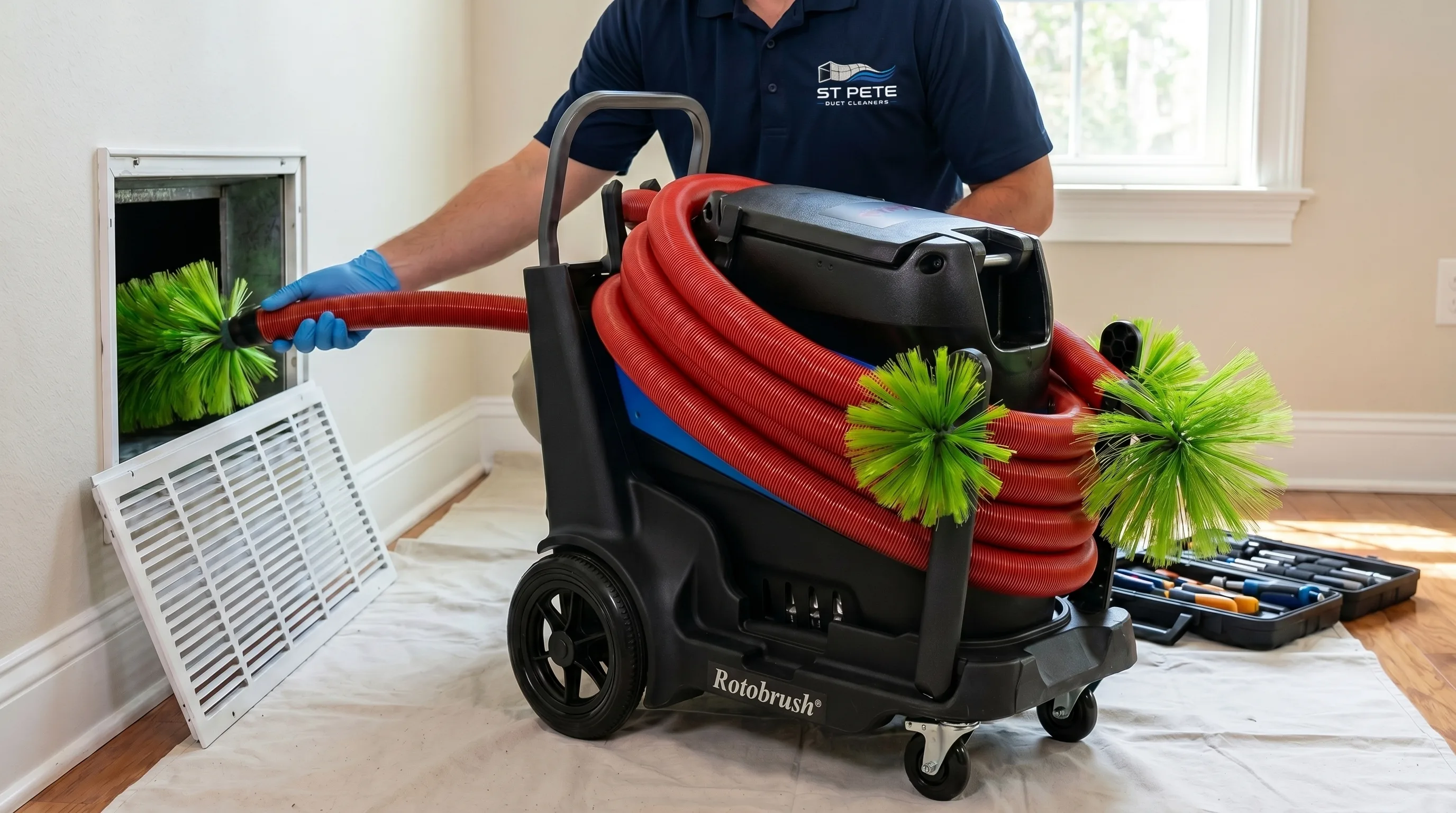
Clean first, then treat if justified
Odor and residue support after source review.
Quick answer
Duct sanitization is worth considering when accessible ductwork has been inspected and cleaned, and there is a specific reason to treat the air path: lingering odor, residue, moisture history, or a post-remediation concern. It should not replace debris removal, coil or drain service, humidity correction, filter-cabinet repair, or duct leakage correction.
When it fits
When accessible duct debris is already cleared and a Kenwood or Old Northeast home still smells musty at startup, treatment becomes a reasonable next step to discuss.
St. Pete's long, damp cooling season leaves a record of leaks and condensation, so prior water events near the air handler should be reviewed before deciding treatment is useful.
A Shore Acres homeowner who has had flood or water work done may ask about treatment afterward, but the treated area and its limits should be spelled out first.
Visible film or residue on registers and returns in a closed-up snowbird home can support a more specific conversation than a blanket spray.
Source control
Many bungalow-era and block homes in Old Northeast and Disston Heights have original attic duct runs, and that accessible debris should be cleaned first because sanitizing does not remove dust or buildup.
St. Pete's high bay humidity keeps coils wet and condensate drains working hard, so coil film, a slow drain pan, or standing water at the air handler often drives the musty smell and needs correction when found.
A loose return filter or a gappy cabinet in a waterfront or older home keeps pulling humid, dusty air around the filter, so that leak should be sealed before any treatment is judged.
Not a shortcut
No inspection or source explanation
No debris cleaning before treatment
Active drain, moisture, or humidity problem
Health guarantee, mold cure, or one-size-fits-all promise
Cost factors
Whether duct cleaning is needed first
Number of affected registers, returns, and accessible duct sections
Odor source, moisture history, or post-remediation context
Comfort Club eligibility and related filtration or Pure Breathe recommendations
Member savings
Why homeowners choose us
Direct scheduling line
(727) 306-2496
Division of Hales AC
Odor review
Clean before treatment
Market
Pinellas County
Operator
Hales AC CAC1822636
Home air system review
Inspect first. Clean what the home actually needs.
Built for duct cleaning, dryer vents, filtration, and indoor air quality in one visit path.
Sanitizing only when inspection supports it
Questions homeowners ask
Duct sanitization can be worth considering when accessible ductwork has been cleaned and inspection supports treatment because of odor, residue, moisture history, or a specific post-remediation concern. It should not be sold as an automatic add-on for every duct cleaning.
Ductwork should be inspected and cleaned before any sanitizing treatment is discussed. If treatment is appropriate, the technician should explain the product, application area, system limitations, and why sanitizing is being recommended.
Sometimes it can support an odor plan after cleaning, but it does not fix active moisture, drain, coil, filter-bypass, humidity, or duct-leakage problems. The source has to be identified or the odor may return.
Not automatically. A musty smell means moisture or organic odor should be investigated. St Pete Duct Cleaners does not diagnose medical conditions or make mold claims without visible, supportable evidence.
Hales AC Comfort Club members can save 20% on eligible duct cleanings, air filters, UV lights, and indoor air quality products. Membership benefits follow Hales AC Comfort Club terms.
Related next steps
Review when sanitizing fits the broader Pinellas County service.
Compare useful treatment conditions with moisture, drain, coil, and filter problems that need source correction first.
Learn how odor can connect to ducts, coils, drains, humidity, or filters.
Compare UV treatment when the coil area and system fit support it.
See the county-wide service map and every Pinellas city and service page.
Duct sanitization review
Include the room, odor timing, recent leaks or remediation, visible residue, filter issues, and whether the ducts have already been cleaned.